Decide which Kamphaeng Phet you want to explore
Kamphaeng Phet Historical Park is not a single temple enclosure. Its main planning decision is whether to visit the monuments within the old city walls, the outlying Aranyik group, or both. Buy and organise the visit around that distinction. Arriving with only one temple name can leave you in the wrong part of the park for the route you had imagined.
The Fine Arts Department describes Wat Phra Kaeo and Wat Phra That among the important monuments inside the walls. Its Aranyik list includes Wat Phra Non, Wat Phra Si Iriyabot, Wat Sing, Wat Chang Rop and Wat Awat Yai. These names are useful navigation anchors. They are not a checklist that everyone needs to finish.
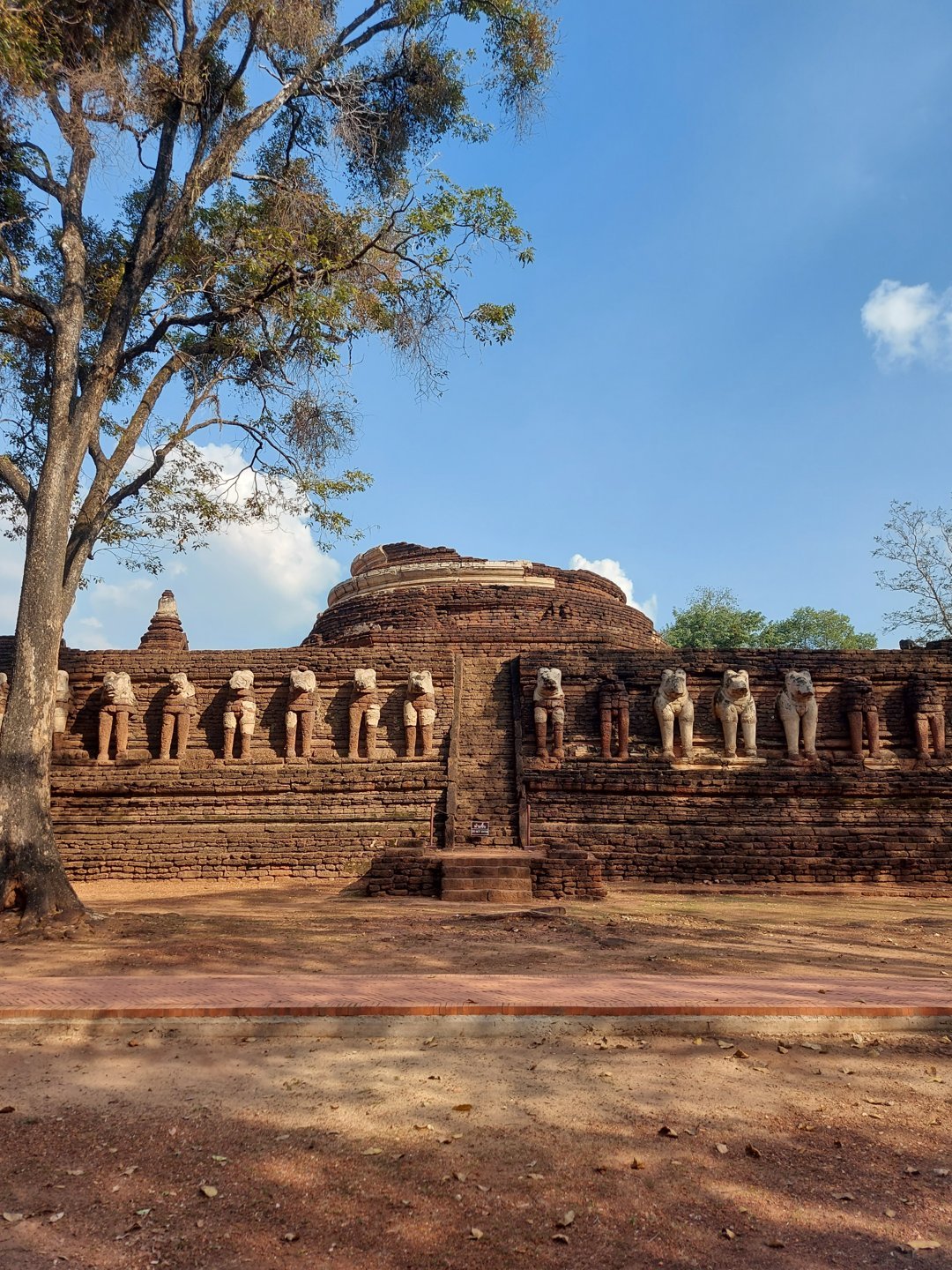

Use one question to organise each zone
Within the walls, make the relationship between religious buildings and the old city your subject. Wat Phra Kaeo is a sensible anchor because the department places it in the city centre. Read the site plan before setting off, then choose a few monuments you can examine with attention. Trying to infer a complete ancient street layout from isolated remains is less useful than understanding the documented groups.
In Aranyik, shift the question to the forest-monastery setting and the separation between temple complexes. The department places this group north of the old city. Wat Chang Rop and Wat Phra Si Iriyabot provide named starting points for planning. The route between them still needs to be checked against the park map and whichever internal transport is operating; this guide does not turn map spacing into a guaranteed walking time.
Kamphaeng Phet is part of the World Heritage property shared with Sukhothai and Si Satchanalai. That relationship supports a regional journey, but it does not make the three parks one continuous attraction. Give Kamphaeng Phet its own day or substantial stop rather than treating it as a quick detour between two better-known names.
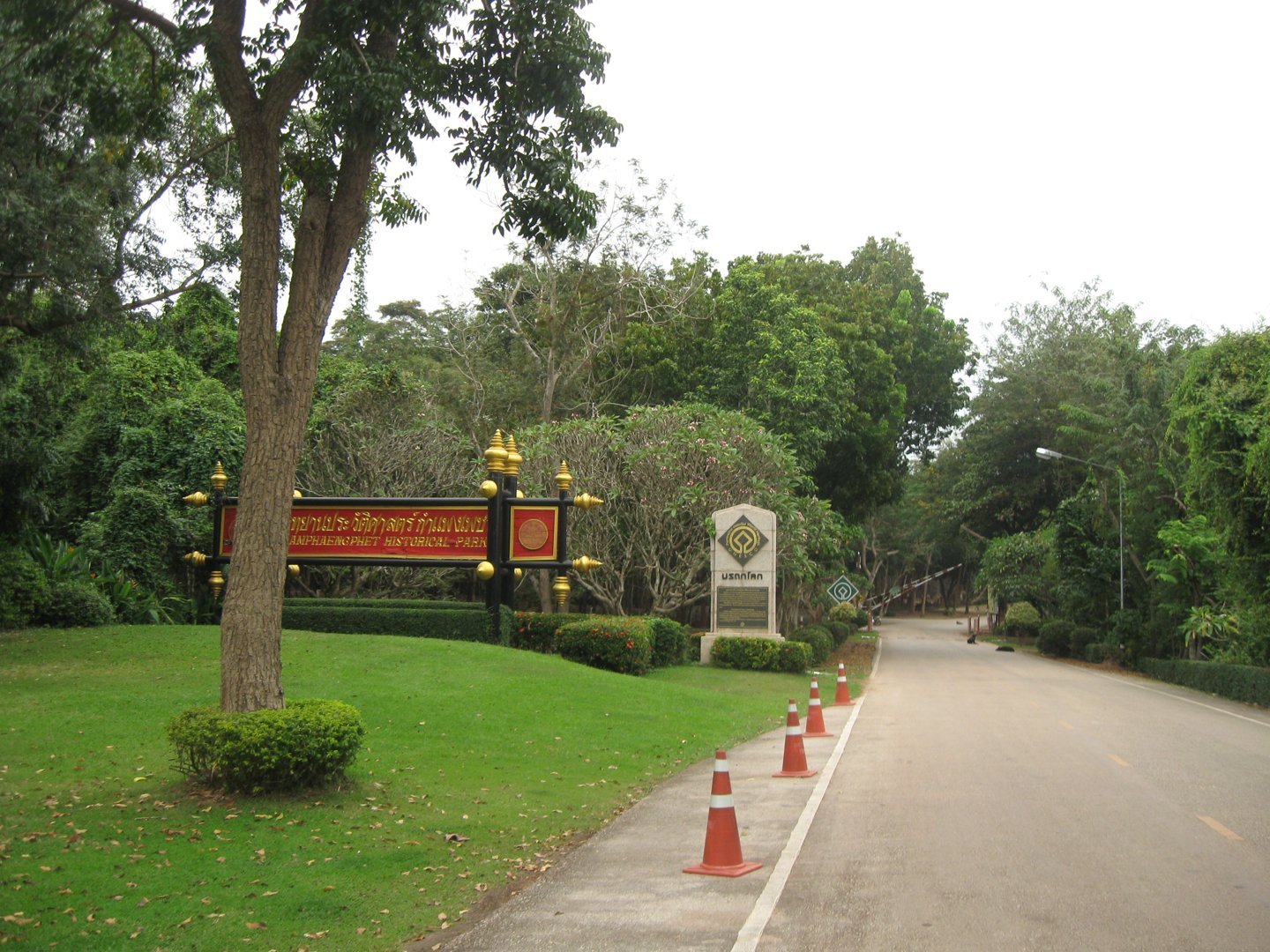

Two zones mean two admission choices
The department’s visitor-service page publishes 20 baht for a Thai visitor in one zone and 30 baht for two, with foreign-visitor references of 100 and 150 baht respectively. It also lists separate vehicle charges. These are useful budget references from an undated official page; confirm the current ticket categories and any temporary arrangements at the entrance.
That same page says visitors may use their own vehicles and advertises an electric sightseeing vehicle at 20 baht per person. It does not establish a current timetable, guaranteed departure, complete route or step-free boarding. Ask what the service actually covers before choosing it as the only way to reach a particular temple. Vehicle admission and a sightseeing ride should not be assumed to be the same purchase.
Build a route that can be shortened
For a short visit, choose one zone and one anchor temple, then add another only after seeing how the pace feels. This is an editorial route strategy, not an official timed circuit. It avoids spending the whole visit moving between entrances while barely examining the monuments.
For a fuller outing, consider one zone first, a break outside the archaeological areas, and the other zone afterward. Keep your transport available between the groups. If someone in the party has limited walking stamina, prioritise the entrance arrangements and nearest important remains before buying a two-zone ticket. No complete wheelchair-accessible circuit was confirmed in the sources read for this guide.
Stay in Kamphaeng Phet for a focused park visit
A base in Kamphaeng Phet town lets you compare accommodation against the particular zone you plan to visit. Check the road approach, parking and how you will reach the other group rather than accepting “near the historical park” as a precise location. A hotel convenient for the old town need not be equally convenient for every Aranyik monument.
If you are continuing to Sukhothai or Si Satchanalai, book the onward journey as a separate transfer with a realistic arrival plan. The shared heritage designation is a historical connection, not evidence of a current shuttle service. No free transfer or frequent public connection is assumed here.
What remains to check
Current opening hours and short-term restricted areas remain unconfirmed here. Confirm those details with the park before an early or late arrival. The monument descriptions establish what belongs to each zone; they do not prove that every structure can be climbed or entered. Follow the access signs on site and use the official map to keep the two groups distinct.