Phimai is a good choice when you want to study a Khmer-period stone sanctuary without treating the visit as a remote hill excursion. The historical park stands within Phimai town in Nakhon Ratchasima Province. Concentrate first on the approach, enclosing galleries and principal sanctuary, then decide whether the separate national museum fits your day. Do not use the museum’s opening days as the park’s timetable, or assume a past night-lighting event is running on an ordinary evening.
Follow the approach before the towers
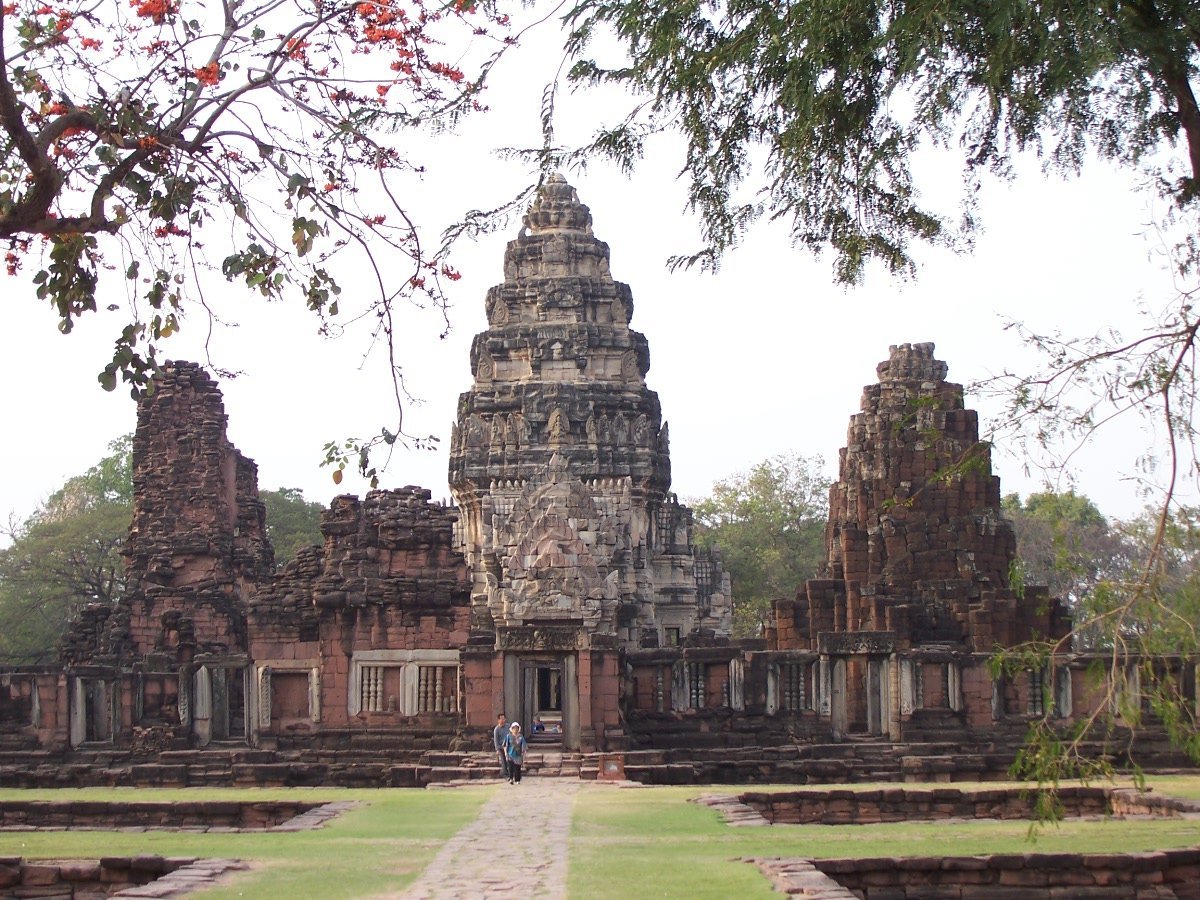
The park’s main interest is the organized progression into the sanctuary. The department’s monument inventory identifies the approach structures, naga bridge, enclosure gateways and central buildings. Instead of going straight to the largest tower, pause outside the enclosure to understand how the entrance aligns with the buildings beyond. That makes the change from open approach to enclosed sacred space much easier to read.
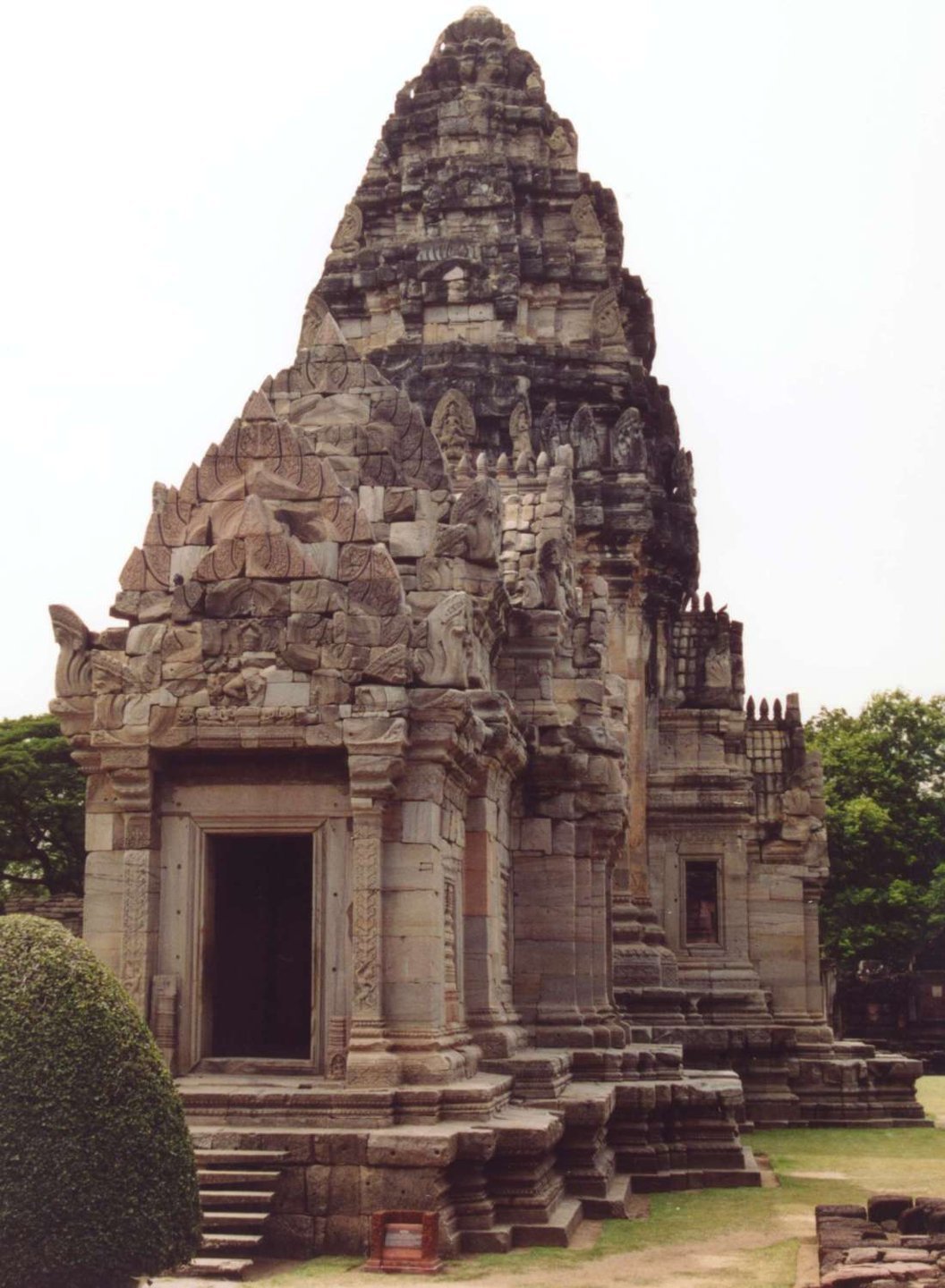
Within the complex, compare the principal sanctuary with the subsidiary structures rather than trying to assign every stone fragment a date. Prang Brahmathat and the Red Stone Prang appear in the official monument descriptions and offer different building forms and materials. Read each label before interpreting a missing statue or an empty chamber: removal for protection, restoration and survival are different issues, and this guide does not pretend that every object remains in its original position.
The site is associated with Mahayana Buddhist worship in the department’s interpretation. That matters because a Khmer architectural form should not automatically be described as a Hindu sanctuary. Let the particular monument’s explanation guide your understanding. A photograph taken from a doorway can be useful, but it should not require standing on fragile masonry or blocking the route for other visitors.

A focused visit or a museum day
Our suggested first visit is a complete circuit of the sanctuary, a pause outside the archaeological area, then a separate decision about the museum. This is an editorial sequence rather than an official guided tour. It keeps the park’s architecture and the museum’s portable objects from becoming one blurred list of things supposedly visible at the same entrance.
Phimai National Museum is a separate institution. If sculpture, inscriptions and carved architectural fragments are your main interest, check its own current opening calendar before arranging transport. A museum closure need not cancel the park visit, and an open park does not prove the museum is admitting visitors. Do not buy a journey on the assumption that one ticket automatically includes both places.

Published hours and the admission discrepancy
The Fine Arts Department’s park service page lists daily opening from 07:00 to 18:00, including public holidays. Treat that as published visitor information and confirm exceptions before a special trip. It is not evidence that a night programme is operating after closing. The same service page contains a foreign-admission figure of 100 baht, but later department event notices publish 200 baht for foreign visitors and 20 baht for Thai visitors.
Because those official pages disagree, budget using the displayed current tariff rather than relying on the older 100-baht web figure. The later notices are evidence of the tariff they published, not an independently verified October 2026 ticket-counter check. Ask about your nationality category and any exemption at the entrance; do not assume an exemption follows from age or student status without the required proof and current conditions.
Night access needs an actual date
The department’s December 2025 announcement extended Phimai Night Light Up on Friday-to-Sunday evenings and public holidays through December 2025 and January 2026. A separate July 2025 announcement also specified its own dates. Those programmes are useful examples of how access can change, but their calendars do not establish regular evening admission for a later trip.
If seeing the illuminated sanctuary is the main reason for your journey, obtain a current dated announcement before booking around it. Check admission hours and whether the event changes the usable entrance, transport pickup or closing arrangements. A hotel describing “night views nearby” is not a substitute for the park operator’s programme, and this guide makes no promise of an upcoming performance or lighting schedule.
Arrival, parking and mobility decisions
The department lists a park car park, an information centre and toilets, including a designated accessible toilet. Those named facilities do not establish a continuous step-free circuit across all the historic stone surfaces. Visitors who need that should ask about thresholds, raised walkways and which parts can be viewed without using steps. Allow the visitor to choose a shorter route rather than promising that every chamber can be reached.
For a day trip from Nakhon Ratchasima city, arrange the complete outward and return journey to Phimai town. This guide does not give a verified current bus departure, fare or journey time. If using a driver, specify the park and the museum separately, and agree the final pickup place. For an overnight stay in Phimai itself, check the accommodation address against the park entrance; “Nakhon Ratchasima” in a hotel listing can mean a much wider area.
What to prioritize if time is limited
Choose the sanctuary’s full approach and central enclosure before adding unrelated stops merely because they appear on a regional itinerary. A quiet, careful circuit gives you a coherent view of how the monument works. If you arrive with only part of the afternoon left, keep the return connection and published park closing in mind before committing to the museum. Carry water for the outdoor part and use permitted paths even where a shortcut across masonry looks tempting.
Sources & visit notes
- https://qrcode.finearts.go.th/index.php/th/historicalpark/phimai/phimai-06
- https://qrcode.finearts.go.th/index.php/th/historicalpark/phimai/phimai-03
- https://www.finearts.go.th/promotion/view/61676-ชวนไปชมหนังกลางแปลงที่ปราสาทหินพิมาย-วันเสาร์-27-ธันวาคมนี้
- https://www.finearts.go.th/promotion/view/57990-ท่องเที่ยวมิติใหม่-ชมปราสาทพิมาย-ยามค่ำคืน-ปีที่-๒--Phimai-Night---Light-Up-
- https://www.museumthailand.com/museum/phimai-historical-park