The rocks are only the beginning
Phu Phrabat is a landscape to read on foot, not a single temple building. The unusual rock shelters are the first thing many visitors recognise, but the boundary stones and the changes people made to those shelters explain why the place matters. Give yourself time to look around each formation instead of moving only between the most photographed shapes.
The historical park is in Mueang Phan Sub-district, Ban Phue District, Udon Thani. It is a separate outing from Ban Chiang. Both belong in an archaeology-focused trip, but they present different evidence and should not be grouped into one easy local walk simply because they share a province.

What the World Heritage listing actually recognises
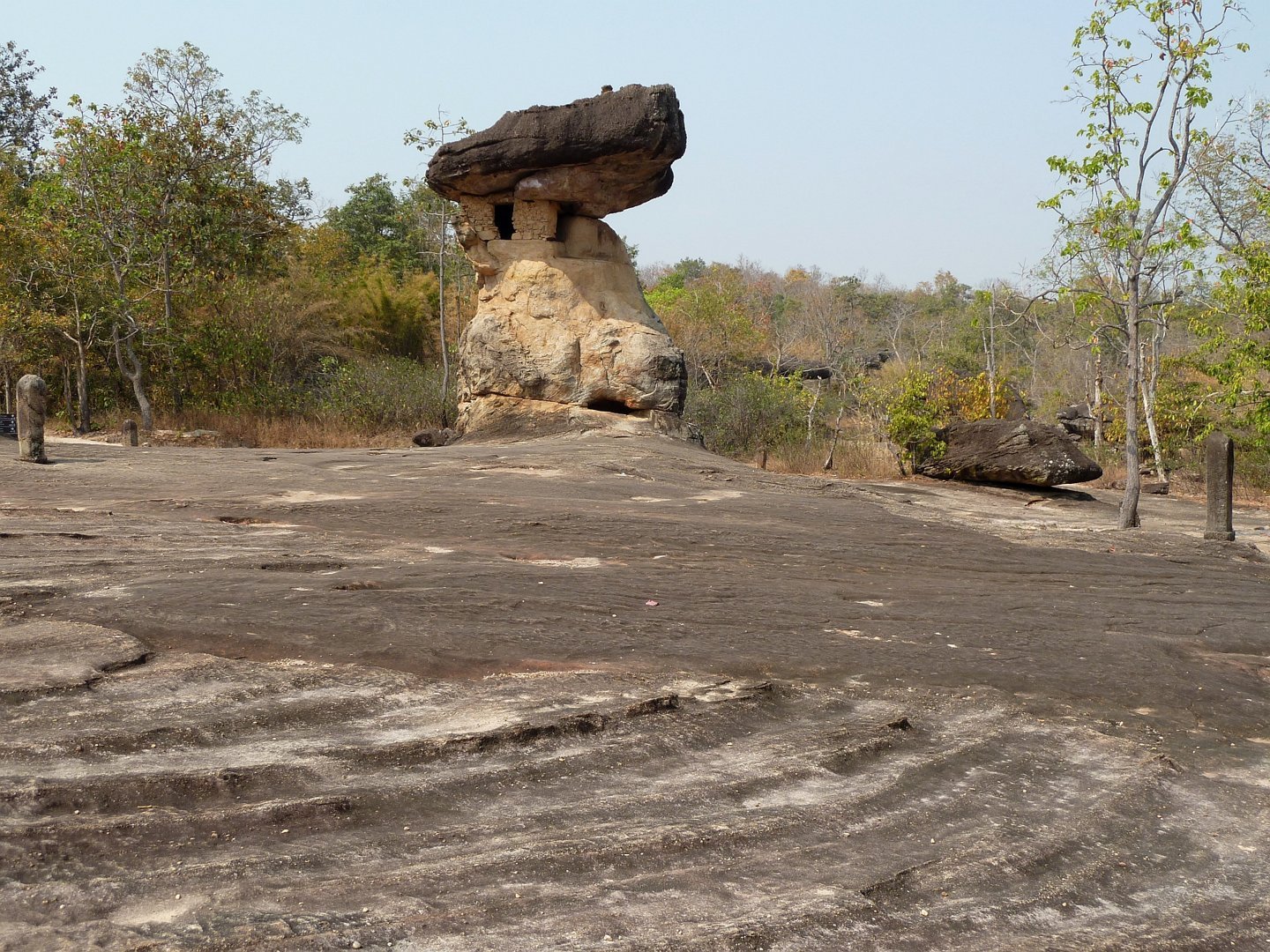
UNESCO inscribed Phu Phrabat in 2024 for its testimony to the Sima stone tradition of the Dvaravati period. These stones marked sacred boundaries for Buddhist practice. The value lies partly in their continued positions in the landscape, so the relationship between a stone, a shelter and its surroundings matters as much as the appearance of any single object.
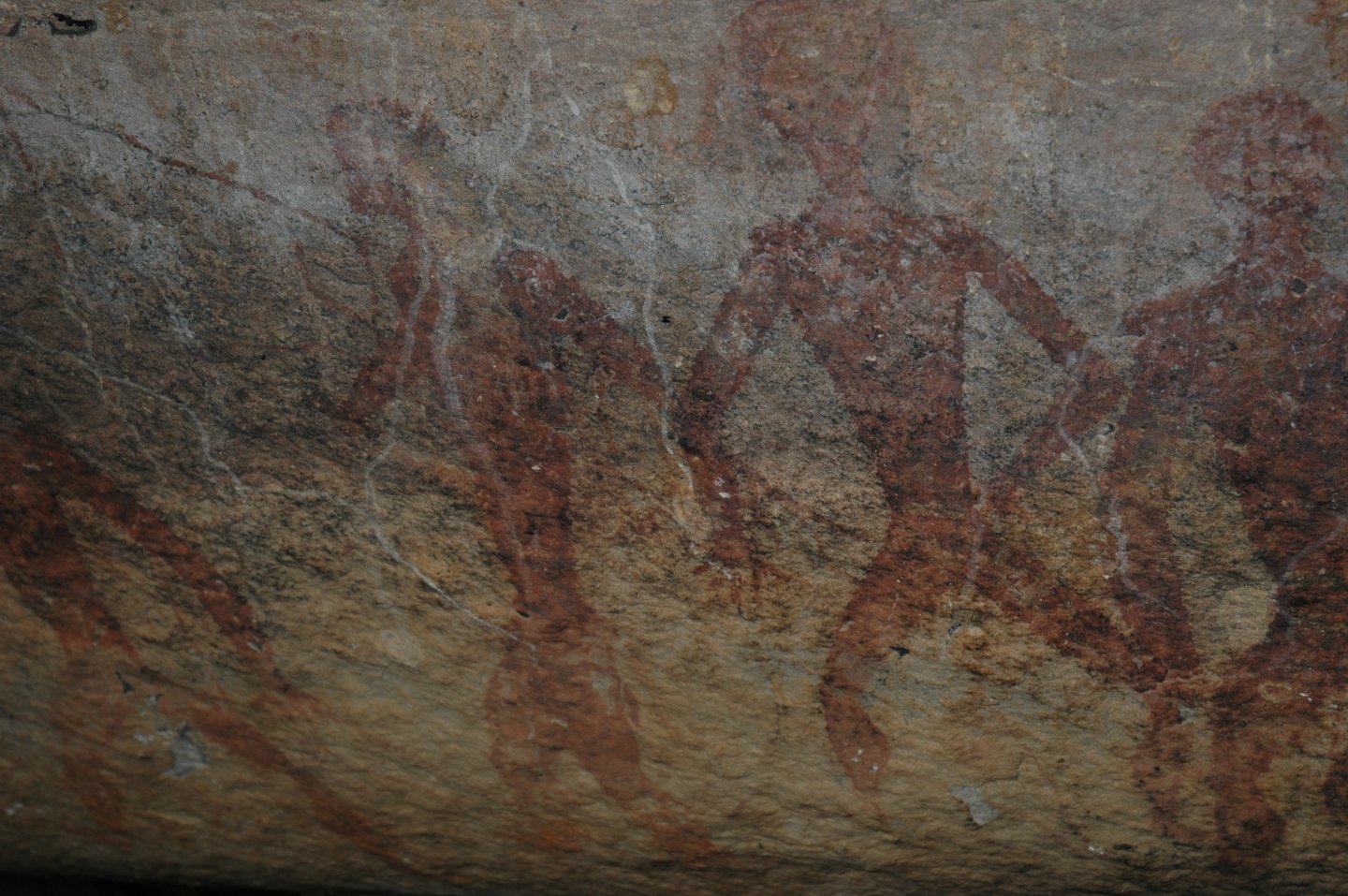
Look for the distinction between naturally formed rock and later human modification. UNESCO describes a landscape reshaped for religious use over centuries, with rock paintings also recording earlier occupation. It would be misleading to explain every formation as a constructed temple, or every painted surface as belonging to the same Buddhist period.
The Fine Arts Department’s 3D heritage account describes Hor Nang Usa as a prominent rock formation later adapted by people, with boundary stones around it. The account distinguishes observed evidence from an interpretation of ritual use. Local legends attached to names are part of the visitor story, but they are not a substitute for the archaeological explanation.

Plan around walking, then ask what a vehicle can cover
Start at the visitor entrance by asking which marked route is open and how much uneven ground it involves. Choose the route for the walking ability of your group, not only for the number of named shelters. Natural rock surfaces and changes of level are reasons to ask about the actual path; this guide does not claim a complete wheelchair-accessible circuit.
A Fine Arts Department visitor announcement advertises Thai- and English-language interpretation and an electric-vehicle service reaching the Hor Nang Usa area. It does not settle the current departure frequency, charge, booking requirements or boarding arrangements. Confirm those details directly. The existence of a vehicle service does not mean every rock shelter can be reached without walking.
If the vehicle is important to the visit, decide the route only after confirming that it is operating. Otherwise you may book a day around a service described on an older page and find that the practical outing is different. Ask where the vehicle stops, what remains to be walked and where you will be collected for the return.
Plan around the published 08:30 opening
The department’s visitor announcement lists daily hours of 08:30–16:30 and admission references of 20 baht for Thai visitors and 120 baht for foreign visitors, with cash payment only. An older department 3D page gives an 08:00 start. Plan around the later 08:30 opening unless the park confirms otherwise, and recheck the charge and payment method before departure.
The visitor announcement gives 042 219837 and 042 219838 for enquiries during opening hours. The page also promotes seasonal flowers, but it does not establish which plants will be flowering on your date. Use it for the published visitor arrangements, not a guarantee of a particular natural scene or the current condition of every path.
A focused outing from an Udon Thani base
Consider a return road arrangement from Udon Thani when Phu Phrabat is part of a broader stay. The department’s older location page places the park around 67 kilometres from the provincial city. That is a general orientation, not an exact route from a selected hotel and not a promise about journey time.
A substantial half-day or a relaxed day with road transfers is an editorial planning option for visitors who want to read the site explanations. The park has several kinds of evidence, so there is little benefit in allocating only enough time to take a photograph at Hor Nang Usa. Agree on waiting time and the return with your driver before setting off.
Keep the evidence in place
Do not touch rock paintings, move stones or climb formations merely to recreate a photograph. At Phu Phrabat, the positions and surfaces are part of the evidence you came to see. Respect closures even when a neighbouring formation appears accessible. Before leaving, check that your notes distinguish prehistoric painting, Buddhist boundary marking, later adaptation and local legend. That gives the outing a clearer story than treating every rock as the same kind of ruin.