Si Satchanalai Historical Park deserves its own day of decisions. The central temples, hilltop remains, Chaliang area and pottery-production sites are not interchangeable stops at one compact monument. Begin by deciding whether you want a focused temple circuit or a wider archaeological excursion. Also check the destination name carefully: Si Satchanalai National Park is a different attraction, and directions for its forest and waterfalls will not take you to this historic city.
A first circuit with clear contrasts
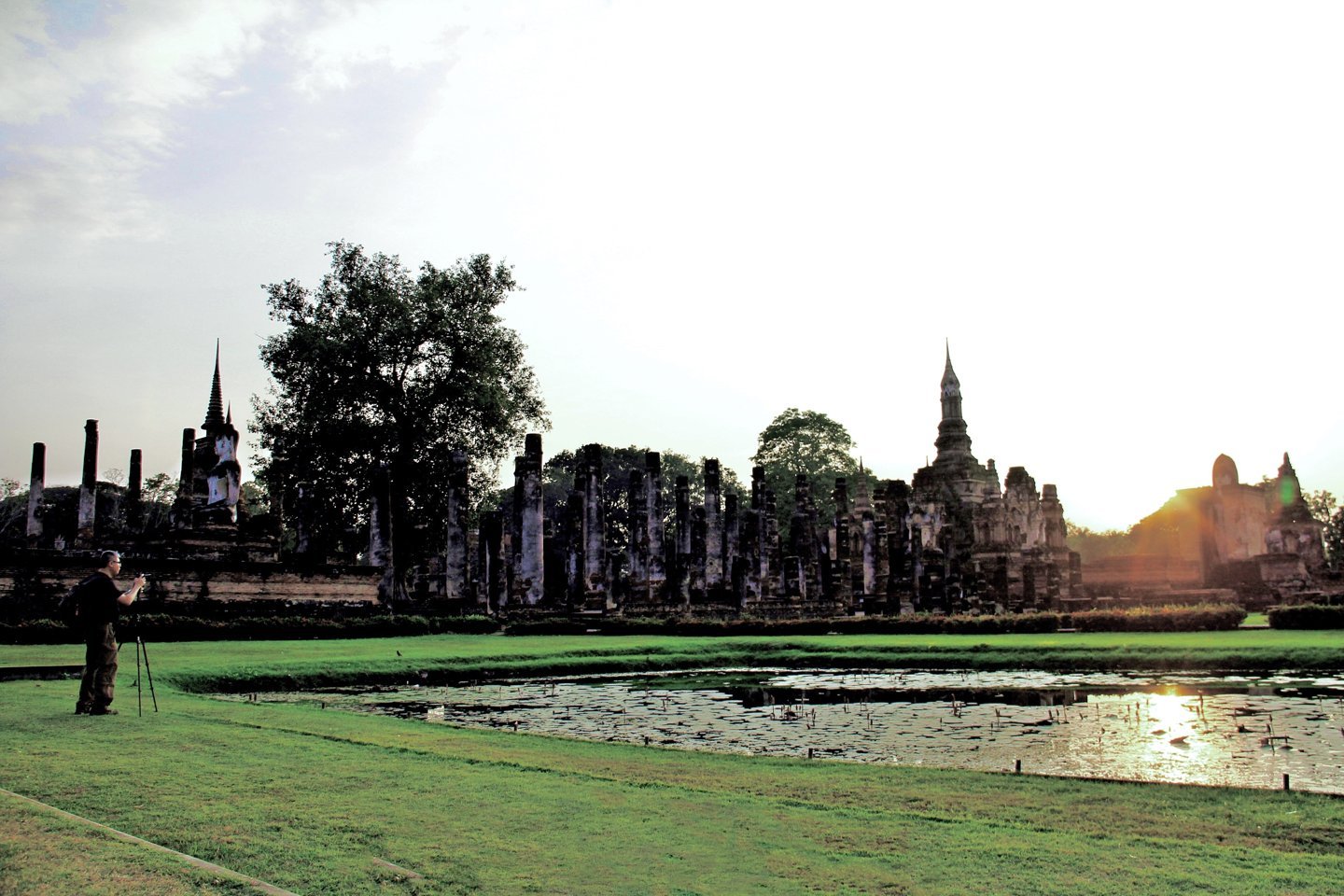
Start your plan around Wat Chang Lom and Wat Chedi Chet Thaeo. The department describes Chang Lom as an elephant-supported chedi on a square platform, while Chedi Chet Thaeo has a lotus-bud principal chedi and a group of subsidiary structures. Their proximity in the department’s monument descriptions makes them a useful paired introduction: compare the arrangement of the bases and surrounding buildings rather than judging one by how complete its tower appears.
Then consider Wat Nang Phaya, where the significance is not simply another tall ruin. Use the on-site interpretation to look for surviving decorative work and the relationship between chedi and hall. Our suggested sequence is a way to organize attention, not a prescribed official route. Follow the entrance map and barriers for the actual order of access, particularly where work or weather changes the usable paths.

Keep the hill temples optional
The department places Wat Khao Phanom Phloeng on a hill inside the city walls and identifies a laterite chedi and a shrine reached by steps. Wat Khao Suwan Khiri occupies another hill in the same range. That is a different physical outing from looking at monuments on the lower ground. Decide about climbing while everyone is still comfortable, not after spending the day trying to complete every name on the map.
For visitors who have difficulty with steps, a lower-level temple circuit is a meaningful visit in its own right. Do not interpret the presence of a road or a bicycle route elsewhere in the park as evidence of an uninterrupted step-free route to a hill shrine. Ask staff which approaches are currently open and what surfaces to expect; no site-wide wheelchair-access guarantee has been verified for this guide.

Chaliang and the kilns are separate choices
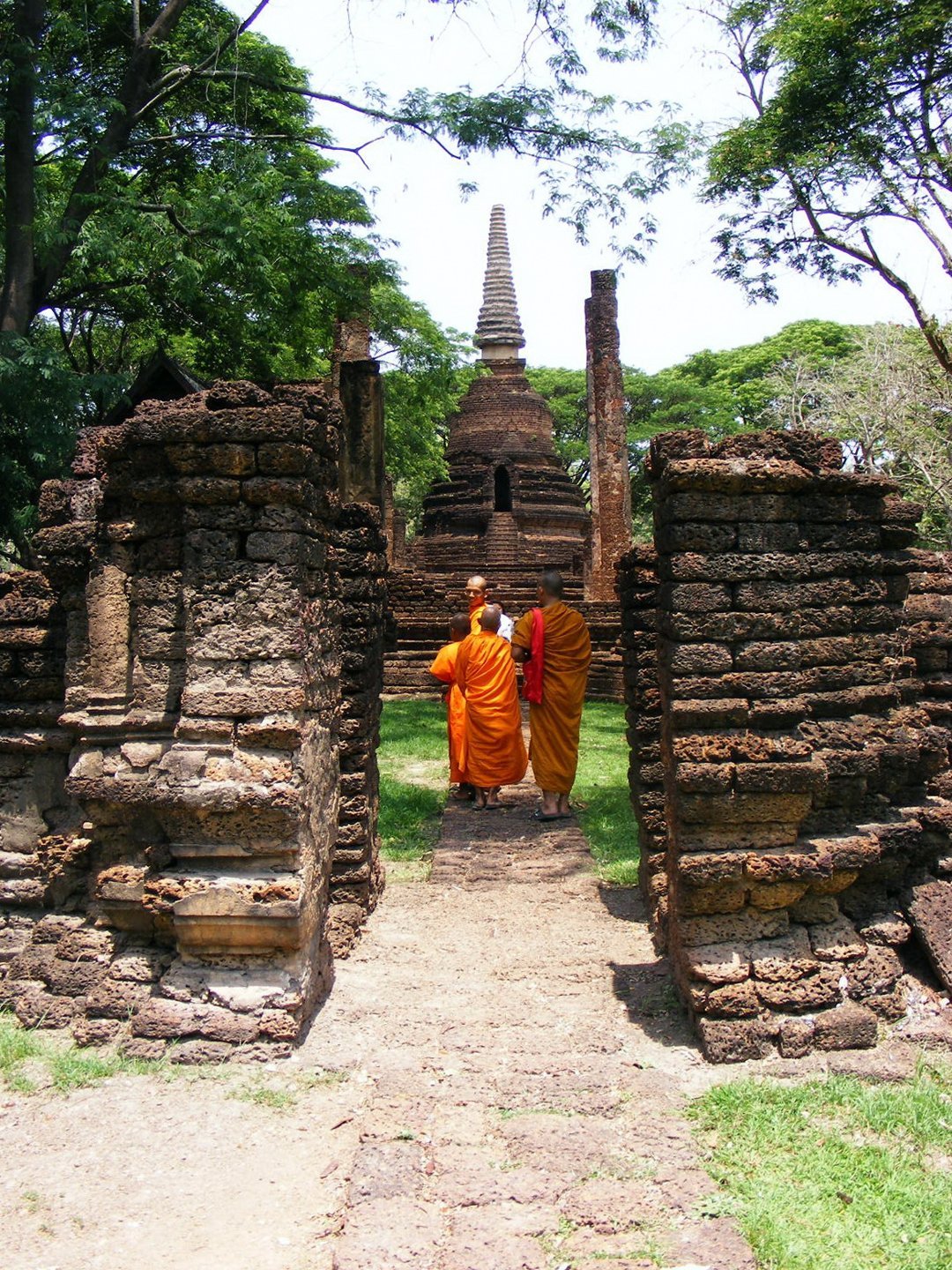
Wat Phra Si Rattana Mahathat Chaliang lies outside the city walls to the southeast in the department’s inventory. Wat Chom Chuen and Wat Chao Chan add another group of archaeological remains nearby. If these are priorities, name them when arranging your transport, rather than requesting only the main park gate. The useful decision is how you will connect the groups and return, not whether you can collect another temple photograph.
The Ban Ko Noi kiln sites explain a different part of the area’s past. UNESCO identifies Si Satchanalai as an important ceramic-production and export centre; the department locates the kiln group away from the central city. For someone interested in materials and trade, that extension may be more rewarding than adding a second hill climb. Confirm the specific exhibition or conservation building you want to enter and its own opening arrangements before committing the whole afternoon.
Getting there without losing the return journey
A private vehicle or a prearranged car-and-driver arrangement gives you a clear way to combine the separated groups. Ask for the main park, Chaliang and kiln sites individually, with a stated return destination. A quote to “Si Satchanalai” may refer to the district rather than every archaeological stop. Agree whether waiting time and extra stops are included, and keep the return details available offline.
If you intend to use public transport, first confirm the exact drop-off and the onward connection to the park entrance. A bus serving the district is not evidence of a door-to-door park service, and this guide does not establish a current bus timetable or fare. An outbound journey that happens to work is not enough if the return service finishes before you leave the ruins. Resolve that question before buying admissions or renting a bicycle.
Admission and daily arrangements
The department’s online information describes bicycles and a tram for the walled city, but availability, departure arrangements and charges should be checked at the entrance. Do not assume the tram also covers Chaliang or the kiln buildings. A bicycle is useful only if the permitted route, rental return point and your group’s riding ability fit the circuit you actually intend to make.
Published opening and admission details differ across tourism pages. This guide therefore avoids promising a current ticket amount or a last-entry time. Plan the main archaeological visit in daylight, confirm the park’s current tariff, and ask whether any combined ticket covers the additional buildings you want. A historic combined-ticket description is not a guarantee that every named attraction is included today.
A base that matches the excursion
Staying near Sukhothai’s old town can work if you have arranged a dedicated return outing; staying closer to Si Satchanalai can reduce repeated transfers if the kilns and Chaliang are your main interest. Compare the accommodation’s actual location with your first and last sightseeing points. Neither the district name nor the province name alone proves a convenient overnight base.
For a first visit, our preference is a central temple circuit followed by either a hill extension or the Chaliang group. Add the kilns when pottery production is a genuine interest and their opening is confirmed. This editorial plan deliberately leaves a choice: the archaeological story becomes easier to follow when each stop answers a different question. Before leaving, check your map for the agreed pickup point rather than assuming a vehicle will be waiting at whichever gate you finish near.